
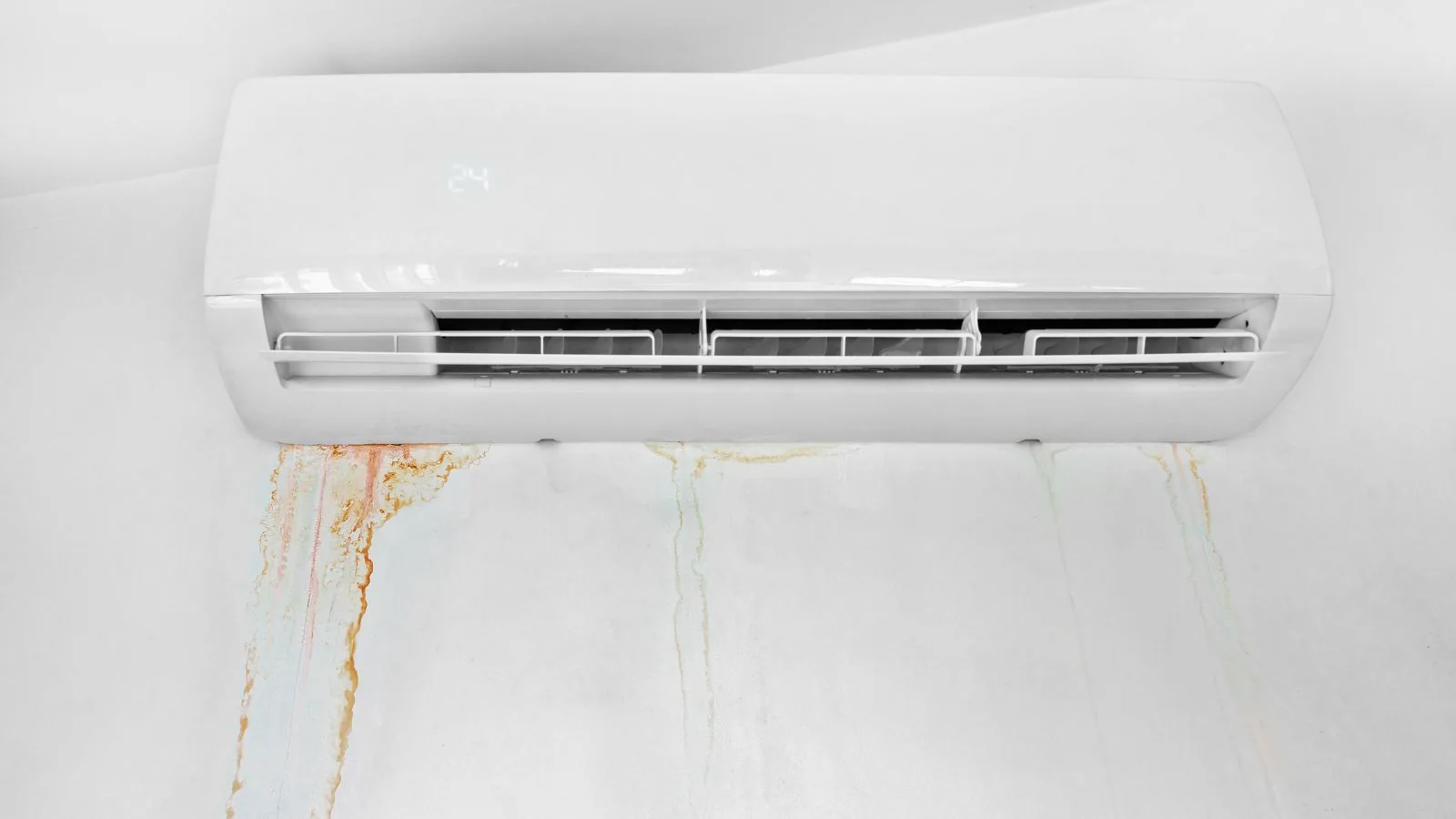
AC leak water damage in Dickinson, TX starts with a drain line that is supposed to carry condensation away from the air handler. When that line clogs, the pan fills, overflows and sends water into the ceiling, the attic floor or the closet around the unit. The unit often keeps running, so the water keeps coming.
Cooling a house in a humid climate produces a lot of condensation, which is why drain lines clog with algae and debris. The leak may begin slowly, and the first sign is often a stain on a ceiling or a damp patch on the floor of a utility closet.
Common sources of AC water damage
- A clogged condensate drain line.
- A rusted or cracked secondary drain pan.
- A frozen evaporator coil that thaws and overflows.
- Poorly sloped or disconnected drain piping.
- A failed float switch that should have shut the unit off.
Signs to look for
Look for ceiling stains below an attic air handler, a wet floor near the unit, a musty smell around the closet, water in the pan or an air conditioner that stops cooling. If a stain is spreading, turn the system off at the thermostat and the breaker to stop adding water.
Turn off the system
Switch the AC off at the thermostat. Cut the breaker only if the panel is dry and reachable. If water is near the unit or its wiring, stay out and call your electric provider or 911 for any shock risk before calling a technician.
What to do before drying starts
- Turn the system off so it stops producing water.
- Place towels and buckets to catch drips and protect floors.
- Photograph the pan, the stain and the room.
- Call an HVAC technician to clear or repair the drain line.
- Call our line if water has reached ceilings, walls or flooring.
Water spreading from the AC? Call the line for help.
Drying after an AC leak
Attic leaks are the hardest to catch. Water saturates insulation, runs along joists and soaks the ceiling drywall below. Crews use a thermal camera to find the wet path, remove wet insulation and open the ceiling where drywall is soft. Air movers and dehumidifiers then dry the cavity. The ceiling water damage repair page explains the repair that follows.
Closet leaks are simpler. The floor is extracted, baseboards are lifted and the bottom of the wall is checked. Because the water is usually clean at the start, drying in place is often possible if it is caught early.
Preventing a repeat
Have the drain line cleared as part of regular HVAC maintenance, install a float switch that cuts the system when the pan fills and check that the pan is not rusted. A restoration crew can dry the damage, but only an HVAC technician can fix the line that caused it.
Who does what after an AC leak
An HVAC technician clears the drain, replaces a cracked pan, tests the float switch and checks the coil. A restoration crew dries the structure the water reached. The jobs are separate, and they fit together best when the technician finishes the repair while drying is under way.
Ask the technician to note the cause in writing, since your insurer may ask whether the leak was sudden or built up over time. Keep that note with your photos.
Professional drying of an air conditioner leak follows the ANSI/IICRC S500 standard for water damage restoration, which treats condensate water as clean at first and reclassifies it if it sits in insulation or a dirty drain pan.
AC leak damage cost factors
We explain scope and price before work starts.
- How long the drain was blocked.
- Whether water reached the attic insulation or ceiling.
- Flooring and cabinet damage in the closet.
- Equipment days to reach dry readings.
Home policies vary on drain backups and gradual leaks, and the Texas Department of Insurance says gradual leaks are usually excluded. Ask your insurer before you file.
AC leak questions
Why is water coming from my ceiling near the AC?
The condensate line may be clogged and the pan overflowing. Turn the system off and call an HVAC technician. If the ceiling is wet, call us for drying.
Can I run the AC while I wait?
No. A running system keeps producing condensate that has nowhere to go.
Is an AC leak covered by insurance?
It depends on whether the leak was sudden or gradual and on your policy. Ask your insurer.
Will mold grow after an AC leak?
Mold needs moisture and time. Drying the area quickly reduces the risk, and a technician can advise on the humidity level.