
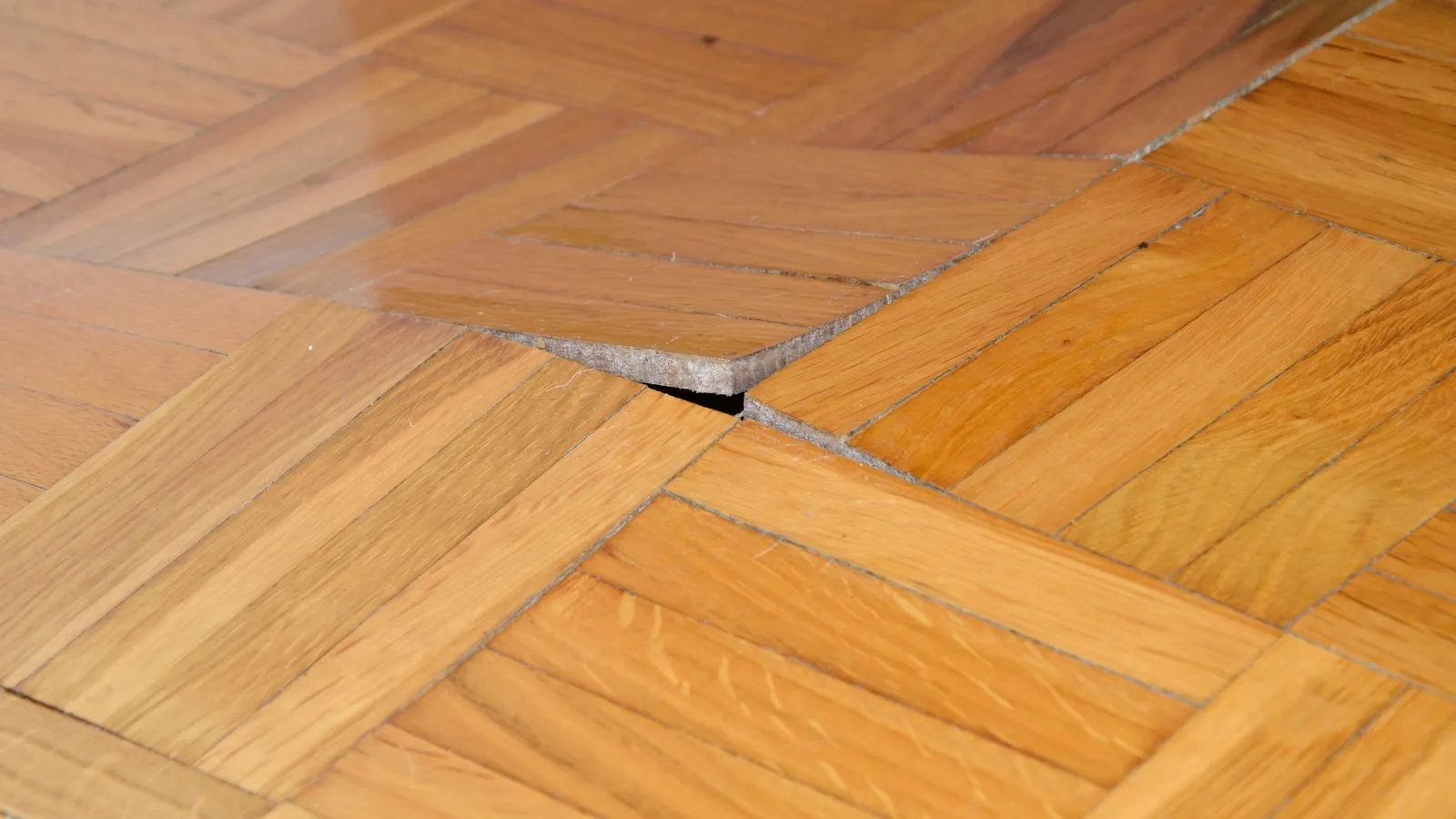
Hardwood floor water damage repair in Dickinson, TX is a decision about timing. Wood absorbs water and swells, and how quickly that happens depends on the species, the finish and how much water reached the underside. A floor that looks fine the day after a leak can cup and buckle a week later as moisture works through the boards.
The central question is whether the floor can be dried in place or must be replaced. That question is answered with moisture readings, not appearance, because the surface of a board can look dry while the subfloor beneath it is still wet.
How wet wood changes shape
- Cupping: the edges of each board rise higher than the center because the bottom absorbed more water than the top.
- Crowning: the center of the board rises, which often appears after a cupped floor is sanded too soon.
- Buckling: boards lift off the subfloor, a sign of severe moisture.
- Gapping: boards shrink and open spaces after drying.
- Staining: dark marks can mean mold or tannin reacting with water.
Solid wood, engineered wood and laminate
Solid hardwood can often be dried and refinished when the water was clean and caught early. Engineered wood, with a thin top layer over plywood, is more sensitive because the layers swell at different rates. Laminate is the most vulnerable. Its core is fiberboard, which swells and does not return, so it is usually replaced.
What to do right away
- Stop the water and extract standing water from the surface.
- Remove rugs, furniture legs and mats that trap moisture.
- Photograph the floor from several angles.
- Do not use heat guns or force fans on the surface, since fast drying can crack boards.
- Call us for moisture mapping and a drying plan.
Wood floor soaked? Call to talk with dispatch.
How crews dry a wood floor
Crews map moisture across the floor and subfloor. For floors that can be saved, drying often uses specialized mats and systems that draw moisture from beneath the boards, along with dehumidifiers that control the room air. Pulling a few boards at the edge gives access to the subfloor. Drying wood slowly reduces the chance of splitting.
After drying, the floor needs time to settle. Cupping often eases as moisture equalizes, and sanding too soon leaves a floor that crowns later. Waiting for stable readings saves rework. If boards stay cupped, sand and refinish, and if they are buckled or moldy, replace them.
Floors over slabs and crawl spaces
A wood floor over a concrete slab or a vented crawl space can pick up moisture from below as well. The slab leak and crawl space pages explain those sources. A floor that cups with no obvious leak often points to moisture from underneath.
Matching the finish
Repair means matching color and sheen, and old floors take careful blending. A full-room refinish often looks better than a patch. Ask your flooring contractor about a sample and about how long the finish must cure before furniture returns.
Room conditions while the floor dries
Keep the air conditioning running at a steady setting and leave windows closed, because outdoor humidity on the Gulf Coast slows drying and can push moisture back into the boards. Lift rugs and mats so air reaches the whole surface. Stay off the floor while it is cupped, since walking on swollen boards can crack the finish and the tongue-and-groove joints.
Your crew will tell you when moisture readings have settled enough for sanding to start.
Hardwood floor water damage cost factors
We explain scope and price before work starts.
- Square footage and flooring type.
- Whether drying in place is possible.
- Subfloor moisture and underlayment.
- Sanding, refinishing or replacement after drying.
Home policies often cover sudden leaks that damage floors, according to the Texas Department of Insurance, and the cause of the water affects coverage. Photograph the floor over several days to show how it changed.
Hardwood floor water damage questions
Will a cupped floor flatten on its own?
Often it improves as the wood dries, but not always. Wait for stable moisture readings before sanding.
Can I speed drying with a heater?
No. Rapid drying can split boards. Controlled dehumidification is safer.
Is engineered wood salvageable?
Sometimes, if the water was clean and the core stayed intact. Laminate usually is not.
How soon should I act?
Within the first day or two, since wood absorbs water steadily.