
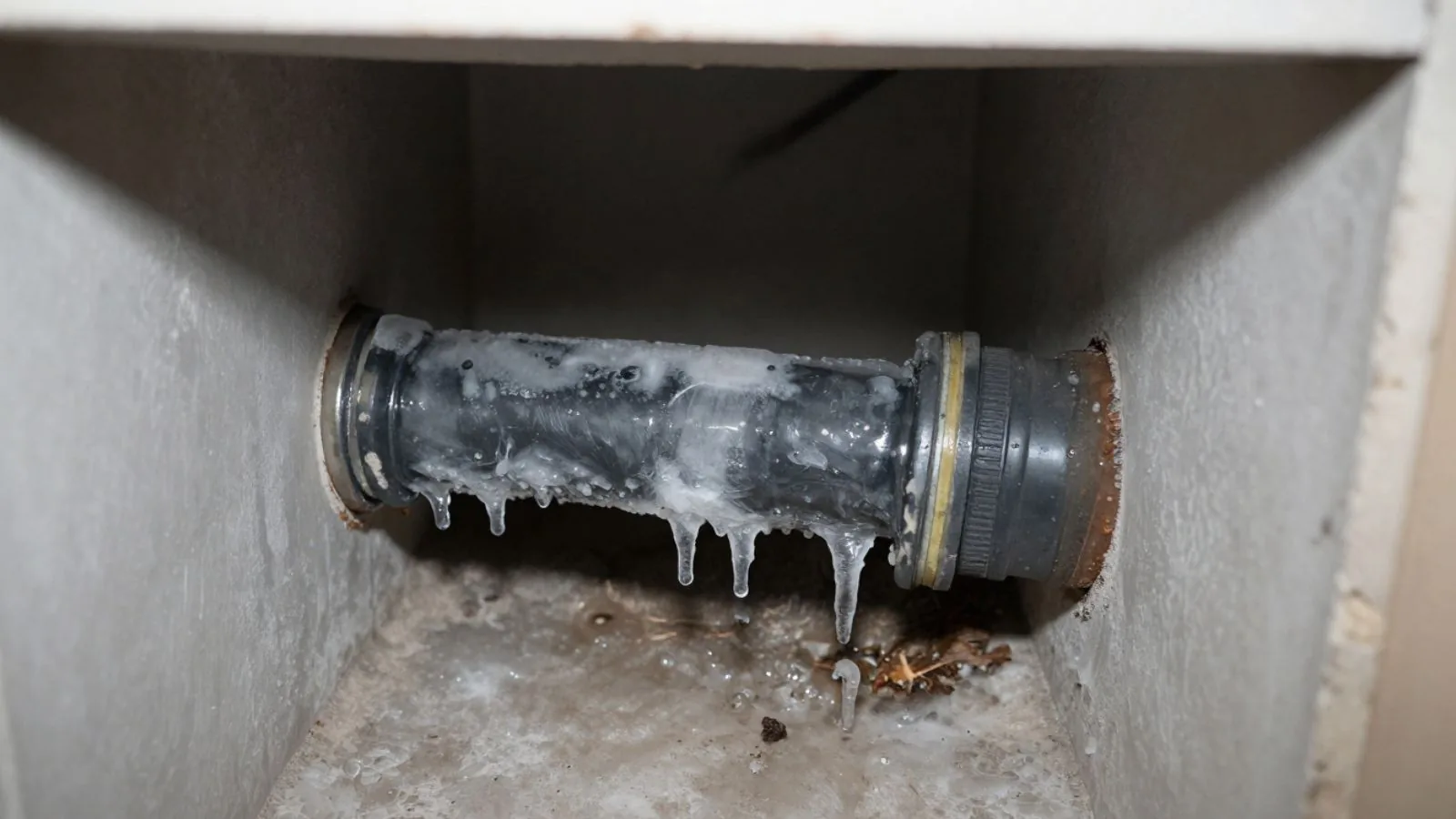
Frozen pipe water damage in Dickinson, TX tends to show up after the freeze is over. Ice can crack a pipe or fitting without leaking, and the water only appears when temperatures rise and the ice melts. That is why a house can look fine at night and have water running inside a wall by afternoon.
Pipes in attics, exterior walls, garages and crawl spaces are the ones most exposed to a hard freeze, and many homeowners do not know where the main shut-off is until they need it.
The February 2021 freeze
The Texas Department of Insurance reports that Winter Storm Uri in February 2021 caused more than eight billion dollars in insured losses and more than 450,000 claims, and that much of the damage came from water from broken pipes. A freeze of that scale is unusual, yet smaller cold snaps can still crack exposed lines.
Signs a frozen pipe has split
- Low flow or no water from a faucet during or after cold weather.
- Frost on a visible pipe, or a pipe that looks bulged.
- Water stains that appear on a ceiling or wall as temperatures climb.
- The sound of running water behind a wall when everything is off.
Do not thaw with flame
Never use an open flame or a torch on a frozen pipe. Slow thawing with warm air is safer. If water is already flowing near electrical equipment, stay out and call your electric provider or 911 before calling the restoration line.
What to do when the thaw begins
- Shut off the main water valve before the pipes thaw.
- Open faucets so melting water has somewhere to go.
- Check the attic, garage and exterior walls for drips or stains.
- Photograph damage before cleanup begins.
- Call the 24/7 line if water has reached ceilings, walls or floors.
Water showing after a freeze? Call the 24/7 line.
How restoration works after a freeze
Frozen pipes often fail in attics and wall cavities, so water travels down through ceilings and into rooms below. Crews extract standing water, then use thermal imaging to follow the moisture path. Ceiling drywall that has taken on water is commonly cut open to release trapped water and to allow drying. The ceiling water damage repair page covers that decision.
Wet attic insulation holds water against the ceiling drywall below, so it is often removed. Dehumidifiers and air movers then dry the exposed framing. A plumber must repair the split before the water is turned back on, and restoration should not be rushed past that step.
Prevention for the next cold snap
Insulate exposed pipes, open cabinet doors under sinks on freezing nights and let a faucet drip when temperatures are forecast to fall below freezing. Know where your main shut-off valve is and test that it turns. Disconnect and drain outdoor hoses. None of this guarantees a pipe will not freeze, but it improves the odds and shortens the response if one splits.
The ANSI/IICRC S500 standard for water damage restoration is the reference for drying after a pipe thaws, and it asks for moisture readings before and after the work.
Frozen pipe damage cost factors
The cost of cleanup depends on where the pipe split and how far the water traveled. We explain scope and price before work starts.
- Attic or wall location, which sets how many ceilings and rooms are wet.
- Time between the thaw and the shut-off.
- Insulation, drywall and flooring that must be removed.
- Drying equipment needed in affected rooms.
Texas Department of Insurance guidance says home policies commonly cover water damage from broken pipes, with exceptions, so check your policy. Take photos before cleanup, and keep the damaged pipe section if the plumber allows.
Frozen pipe questions
Do you handle frozen pipe emergencies at night or on weekends in Dickinson?
Yes. Our 24/7 line takes frozen and split pipe calls at any hour, and the dispatcher routes crews by address and loss size. After a widespread freeze, many homes call at once, so call early and shut off the main valve while you wait.
How do I know whether a pipe split before it thaws?
You often cannot. Turn off the main valve before the thaw, then turn it back on slowly and watch for drips, stains and a moving water meter.
Is frozen pipe damage covered by insurance?
Many home policies cover sudden pipe breaks, and each policy has its own conditions. Ask your insurer and report the loss quickly.
Do I need to dry the attic?
If insulation or framing is wet, yes. Wet insulation in an attic can hold moisture against the ceiling for weeks and lead to mold if not removed and dried.