
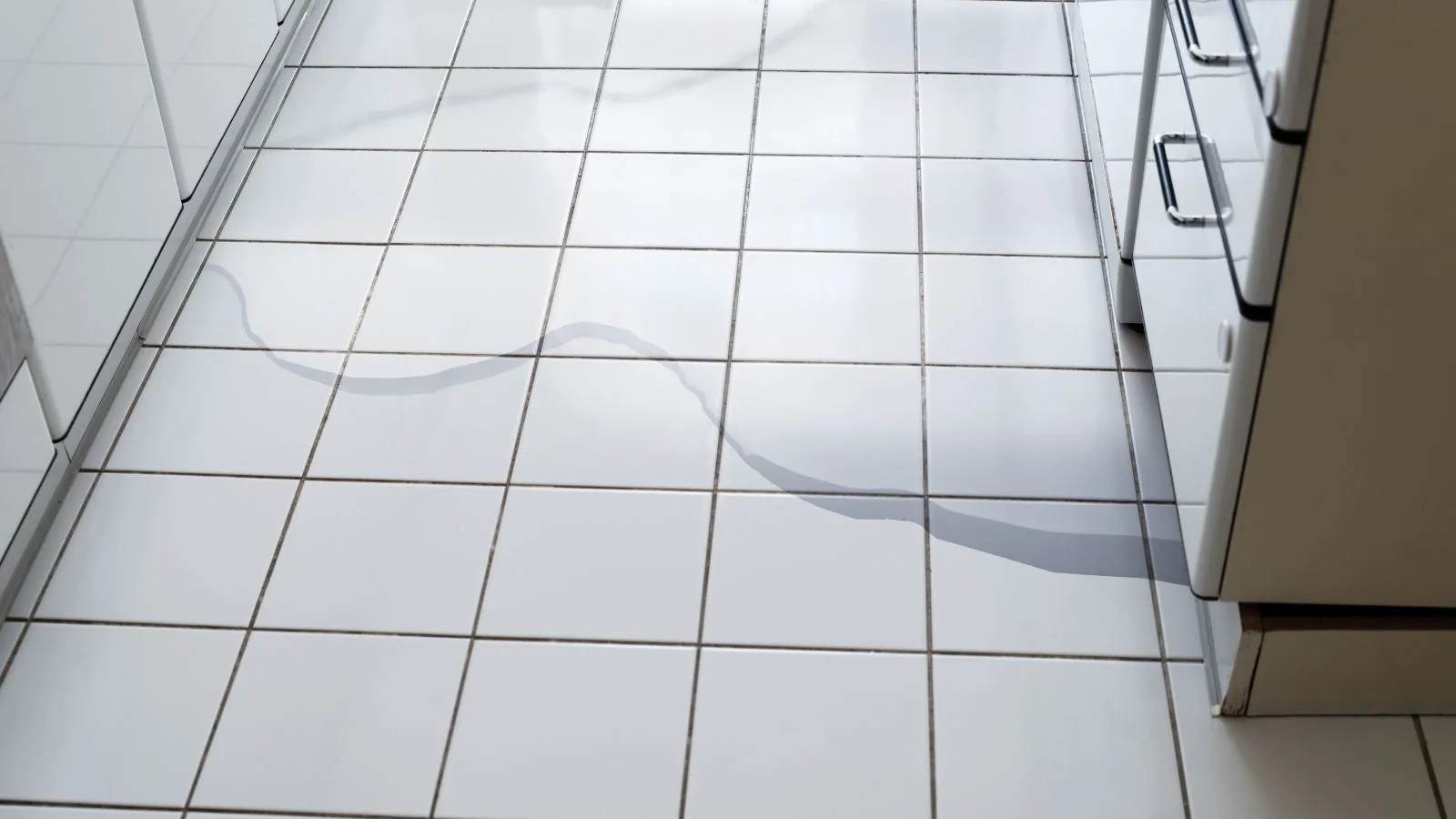
Not every water problem needs a restoration company. A glass of spilled water and a flooded kitchen are different, and treating them the same wastes money in one case and creates damage in the other. The question is not whether you can do the work. It is whether you can do it well enough to prevent hidden moisture.
What you can usually handle yourself
Small spills of clean water on a hard floor are a good example. If the water came from a clean source, covers a small area and has not soaked into carpet, drywall or cabinets, you can mop up, dry the surface and run a fan. Check again after a day to be sure no dampness remains under the edge of the cabinet or the baseboard.
A quick, small leak caught within hours may also be manageable if it only touched a hard surface. Open windows only if humidity outdoors is lower than inside, and use a dehumidifier if you have one.
When to call a professional
- The water is more than a small area or has soaked carpet, pad, drywall or insulation.
- The water came from a sewer, a flood or an unknown source.
- The water has been present for more than a day or two.
- Water has reached electrical outlets, a panel or appliances.
- Flooring is cupping, buckling or lifting.
- You smell mustiness or see mold.
Why the surface lies
Water travels into places a mop cannot reach. It wicks into drywall, soaks pad, seeps under baseboards and into the subfloor. After a day, the surface may look dry while materials are still wet. Mold needs moisture and time, and hidden moisture supplies both.
What professionals add
Moisture meters and thermal cameras find the water you cannot see. Commercial extraction units remove far more water than a wet vacuum. Air movers and dehumidifiers dry materials faster and more completely than household fans. Records of readings prove that the structure is dry. Our structural drying page describes how the process works.
Not sure which side of the line you are on? Describe it to dispatch.
Safety limits
Never handle sewage, flood water or any water near electrical equipment without protection. Do not use a household vacuum on water, and do not stand in water while touching appliances. Cut power only from a dry position. Our flood damage cleanup page explains why contaminated water calls for professional handling.
Cost thinking
DIY drying that misses moisture can lead to mold, rot and larger repairs, which cost more than early professional help. On the other hand, paying a crew to dry a damp towel is a waste. Match the response to the problem. When you are unsure, a phone call costs nothing.
A simple test
Ask yourself three questions. Is the water clean? Is the area small? Has it been less than a day? If all three are yes and the material is hard and non-porous, a DIY response may work. If any answer is no, call.
A worked example
Say a dishwasher hose leaks overnight and you find a puddle by the cabinet at seven in the morning. The water is clean, the floor is tile and the puddle covers a few square feet. You mop it up, run a fan and check the cabinet base. That is a reasonable DIY response.
Now say the same hose leaks while you are at work, and you come home to wet laminate that is lifting, a soft cabinet base and a damp wall. The water has had hours to move. Here a moisture meter and drying equipment save the flooring and reduce the chance of hidden problems.
Document either way
Whether you clean up yourself or hire help, photograph the damage first and keep notes on what you did and when. If the problem turns out to be bigger than it looked, those records support a claim. Keep receipts for fans, rentals and supplies as well.
The professional standard behind the advice here is ANSI/IICRC S500, the published reference for water categories and drying goals.
A Dickinson note: heavy rain and the DIY limit
KTRK reported that Dickinson Bayou spilled its banks in July 2024 after more than six inches of rain. Bayou water in a home is Category 3, which is beyond a DIY cleanup. The National Weather Service said Harvey brought over three feet of rain to many locations in 2017.
The City of Dickinson website has a Trash & Recycling page for debris questions, and the Texas Department of Insurance advises photographing damage before work begins.
Sources: KTRK ABC13 report on July 2024 flash flooding. National Weather Service Houston/Galveston. City of Dickinson website. Texas Department of Insurance.
Dickinson DIY questions
Can I use a wet vacuum on a flooded room in Dickinson?
For a small clean-water spill, yes. For floodwater or sewage, no. Those need professional equipment and protective gear.
How long can I wait before calling a professional?
Within the first day if materials are wet. Waiting lets water soak deeper.
Will fans alone dry my carpet?
They dry the surface. The pad and subfloor need extraction and measured drying.
Should I tear out wet drywall myself?
Not before photographing it and checking whether water is contaminated. A professional can tell what needs to go.