
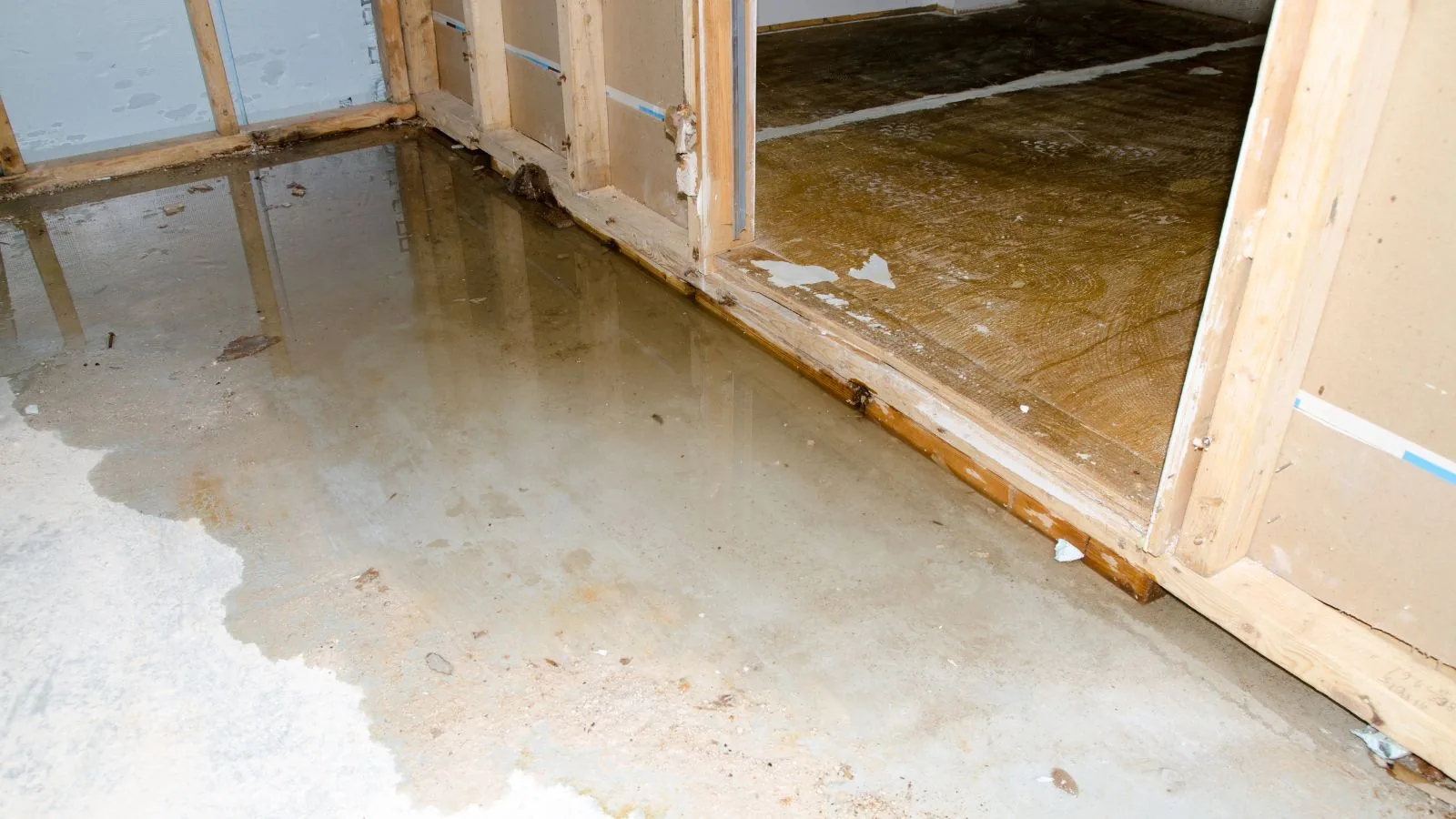
A brown stain on a ceiling raises an immediate question: is this still happening, or did it happen years ago? The answer affects what you fix first, what you tell your insurer and what you ask when buying a home. It is rarely obvious from the surface, but a handful of clues point in one direction or the other.
Fresh damage
New water damage usually looks wet or feels damp. A stain is often darker at the center and fades toward the edges, and paint may bubble where water is pooling behind it. Drywall is soft and heavy, and baseboards may be swollen. Smell is faint at first, a damp or earthy odor. Metal fasteners may not yet show rust.
If the area is wet right now, it is active. A moisture meter or a thermal camera confirms it, and the source is probably close.
Old damage
Old damage tends to be dry and hardened. The stain may be tan, yellow or brown with a clear ring at its edge, because each wetting leaves a line. Paint may be cracked or flaking. Wood may be stained dark and may have rotted or become brittle. Rust on nails and screws, white mineral deposits and long-established mold or mildew all suggest a leak that has been there a while.
Rings and layers
A stain with several rings suggests repeated wetting. Each time the area gets wet, the water spreads a little, dries and leaves another ring. That pattern often points to a leak that comes and goes with rain, with use of a fixture or with the cycle of an air conditioner.
Texture and strength
Press gently on the area. Fresh water-damaged drywall is soft. Old damaged drywall that has dried may be chalky, crumbly or warped and can be hard in places. Wood that is old and wet-dry cycled may have split or cupped. If a screwdriver sinks easily into a stud or joist, the wood may be rotting.
Found a stain and not sure how old it is? Call for a moisture reading.
Use a meter, not your eyes
A stain that looks old may still be taking on water. A moisture meter reads the water content of the material, and a thermal camera shows cool, damp areas. If readings are elevated, the leak is active. If they are normal, the damage is old, though the material may still be weak and may need repair.
Why the difference matters
For a claim, the timeline matters. Home policies usually cover sudden and accidental damage and often exclude long-term leaks, so an insurer may look at whether the damage appears to be old. For a home purchase, old damage might signal repairs that were done poorly or not at all. For a repair, an old leak that has stopped needs a different plan from an active one.
What to do
- Photograph the area with a ruler for scale and note the date.
- Check above, below and behind the stain for the source.
- Stop any active leak first.
- Have an inspector or restoration professional take moisture readings.
- Do not paint over a stain until the area is dry and the cause is fixed.
Related decisions
If the stain is on a ceiling, the ceiling water damage repair page explains what happens next. If it is on a wall or at the baseboard, see the wall and drywall page.
When you cannot tell
Sometimes the evidence is mixed. A stain may look old while the surrounding drywall is damp, which suggests an older leak that has started again. In that case treat the area as active, fix the source and dry the materials. A professional can use readings and a look inside the wall to sort out the history.
Professionals use moisture readings and the ANSI/IICRC S500 water categories to separate old damage from new, so ask any inspector which standard they follow.
A Dickinson note: Harvey-era repairs
Hurricane Harvey in 2017 flooded a large share of Dickinson, and the Galveston County judge called it the hardest-hit part of the county. The City of Dickinson's monthly building reports list permits labeled as flood damage repair due to Harvey, so a home that was repaired after the storm may hide older staining behind new finishes.
If you are buying a Dickinson home, ask about past flooding and repairs, check the FEMA flood map for the address and ask the City of Dickinson Building Permits and Inspections office at 4403 Highway 3 about permits on file.
Sources: Galveston County judge statement on Harvey damage. City of Dickinson monthly building reports. FEMA flood map service.
Dickinson old-or-new damage questions
Can a dry stain still be a problem?
Yes. The material may be weak, and mold can be present even when the surface is dry. A meter and a visual check will tell.
Does an old stain mean I cannot file a claim?
Not necessarily, though insurers may look at whether the damage was gradual. Ask your insurer and document everything.
How do I find out if a house I am buying flooded?
Ask the sellers, check the FEMA flood map and ask the city about permits for flood damage repair.
Should I repaint over an old stain?
Only after the cause is fixed and the area reads dry, otherwise the stain returns.