
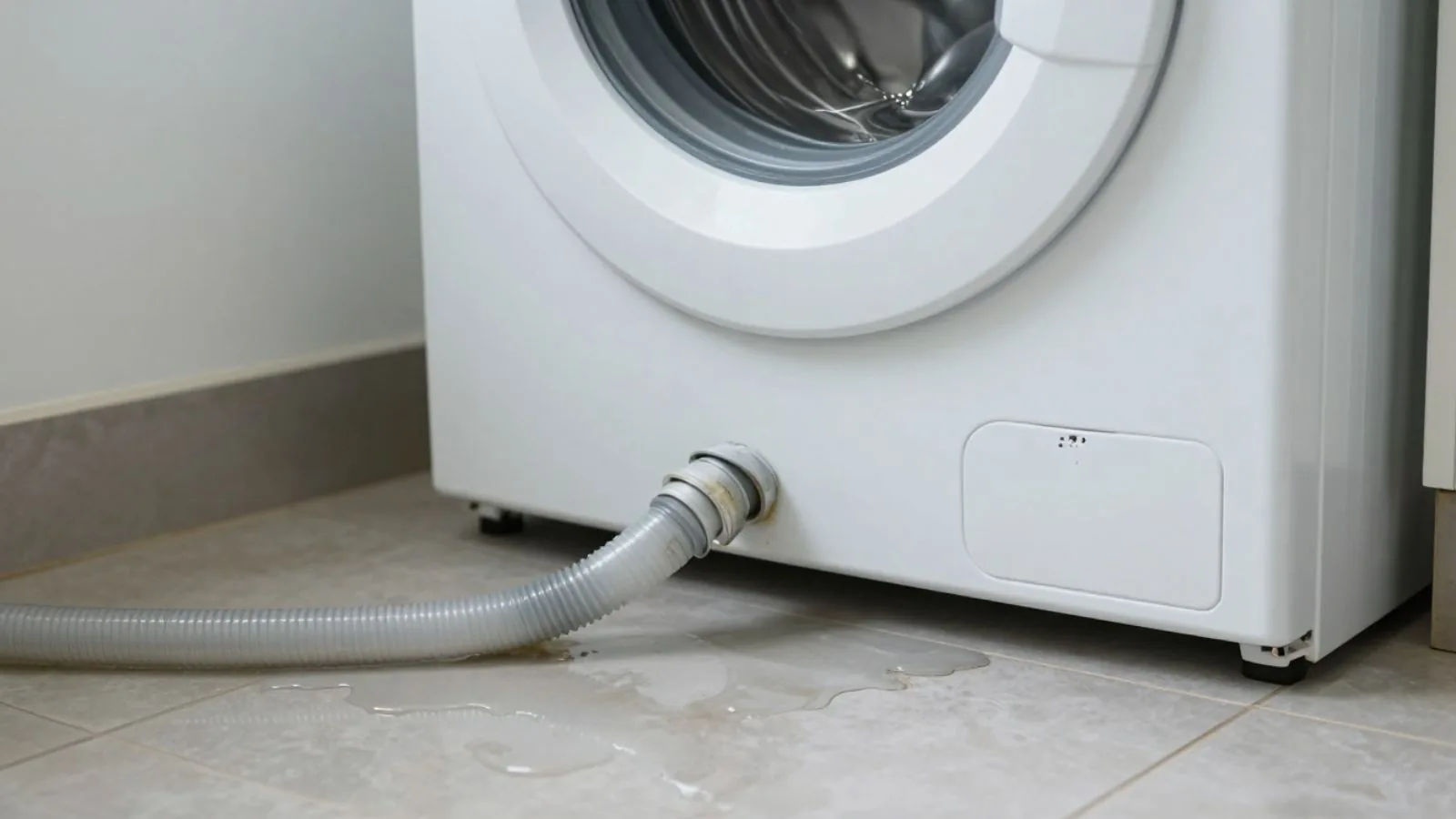
Most water damage claims start with a failure that nobody noticed. A hose lets go, a drain backs up or a heater leaks, and the water runs for hours or days. When you are away, that time is longer, and so is the damage. A short routine before you leave reduces the odds.
Shut off the main water
If you will be gone more than a day or two, close the main water valve. That stops every supply line, hose and fixture at once. Open a faucet briefly to drain pressure. If you cannot shut off the main, close the valves behind the washing machine, dishwasher and toilets.
Find the main valve before you need it, and test that it turns. Stiff valves that have not moved in years can fail when you try them in a hurry.
Check the appliances
- Replace rubber washing machine hoses with braided stainless hoses.
- Look for bulges, cracks and rust at connections.
- Pull the refrigerator out and check the ice-maker line.
- Do not run the dishwasher or the washer on your way out the door.
Water heater
Check the tank and the pan for rust and moisture. If the heater is old, consider replacement before it fails. Turn it to vacation mode or lower the temperature if you will be away for a while.
Air conditioning
Clear the condensate drain line and check that the float switch works. An AC drain pan that overflows while you are gone can soak a ceiling. Many homeowners keep the system on during trips to control humidity, so make sure the drain works.
Came home to water? Call the 24/7 line right away.
Roof, gutters and drainage
Clean gutters and make sure downspouts carry water away from the house. Check for loose shingles, flashing and missing caulk. Look at the grading around the foundation, because water that sits beside the house finds its way in.
Storm season
Before a forecast storm, move valuables off floors, clear drains and know your evacuation plan. Photograph the house inside and out for your records. After the storm, document damage before cleanup, and read our storm water damage cleanup page for next steps.
Cold snaps
In freezing weather, open cabinet doors under sinks, let a faucet drip, insulate exposed pipes and disconnect hoses. If you travel during a freeze, drain the system or ask a neighbor to check the house.
Leak sensors and monitors
Small battery-powered sensors placed under sinks and beside appliances can alert your phone. Whole-house monitors can shut off the water automatically when they detect unusual flow. They cost money, but they pay for themselves if they prevent one loss.
Ask someone to check in
A neighbor or friend who can look inside the house every couple of days can catch a problem early. Give them the main valve location and a number to call. If a loss happens, our frozen pipe water damage page and similar service pages explain what to do next.
Before you go: a short checklist
- Main valve off or key valves closed.
- Hoses and supply lines inspected.
- Water heater checked.
- AC drain cleared.
- Gutters and drains clear.
- A trusted person has your contact details.
Make a simple card for the house
Write a short card and tape it inside a cabinet or leave it with your helper. List the location of the main water valve, the breaker panel and the number of your plumber and your insurance agent. If something goes wrong while you are away, anyone can act quickly without searching.
Review it each season
Pick two dates a year, perhaps the start of summer and the start of winter, to walk through the house. Test the main valve, inspect hoses, look under sinks and clear the AC drain. A fifteen minute walk twice a year catches most small problems before they grow.
If a loss does happen, the ANSI/IICRC S500 standard for water damage restoration sets the water categories and drying goals a professional should work to.
A Dickinson note: freezes, storms and bills
The Texas Department of Insurance reports that Winter Storm Uri in February 2021 produced more than eight billion dollars in insured losses and more than 450,000 claims, and that much of the damage came from broken pipes. League City's council approved a one-time water rate decrease after that storm, a reminder that water use can spike when a pipe fails.
The City of Dickinson website lists a Water Company (WCID#1), and your account number and the main valve location are worth writing on a card near the panel.
Sources: Texas Department of Insurance blog on burst pipe coverage and Winter Storm Uri. ABC13 and Community Impact report on League City water rates. City of Dickinson website.
Dickinson trip-prep questions
Should I shut off my water when I leave for a weekend?
It is a good habit, especially for longer trips. It takes a minute and eliminates most supply line risk.
Does homeowners insurance require me to shut off the water?
Policies vary, and some have conditions for vacant homes. Read yours and ask your agent.
Should I turn off my water heater?
Lowering it or using vacation mode saves energy. If the tank is old or leaking, consider replacing it.
What if I come home to a wet floor?
Close the main valve, stay out if water is near electrical equipment, photograph the damage and call.